
This is a talk I gave at the EuropCom Conference, organized by the European Institutions. I was asked to talk about how to debunk misinformation and false claims about climate change. My take on this subject is that we shouln’t fight facts with facts. Instead we should make climate action more desireable. Here’s the transcript of my talk.
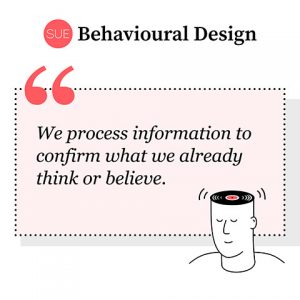
Confirmation bias
In this brief talk I want to make the argument that facts don’t matter when it comes to influencing minds and changing behaviour. Our brain is hardwired to actively search the facts that match with our beliefs about ourselves and the world, as much as it’s hardwired to reject the facts that don’t match with our beliefs, our identity, or our tribe. In the behavioural science this phenomenon is called confirmation bias. We have written about Confirmation Bias before.
I want to argue instead that the challenge is not to fight biased facts, but to re-frame climate action and turn it into something people feel they are part of.
The problem with the current climate narrative
The climate narrative, as being told by environmentalists and people on the green-left political spectrum is full of ingredients that people love to reject:
- It’s a story of guilt: according to activists, it is all our fault, and we are doing everything wrong. Consumerism has doomed us, and we should be ashamed we don’t take action to preserve the earth.
- It’s a story of fear: We are being bombared with climate panic, through a never ending stream of stories about melting ice caps, rising sea levels, high temperatures, natural disasters, and so on. Fear freezes action.
- It’s a story of sacrifice: the message is quite clear. If we want to reverse the effects of climate change, we all need to sacrifice some of our comforts: Leaving the car at home, taking the bike more often, separating our waste,…
(more below the banner)
Would you like to leverage behavioural science to crack your thorny strategic challenges?
You can do this in our fast-paced and evidence-based Behavioural Design Sprint. We have created a brochure telling you all about the details of this approach. Such as the added value, the deliverables, the set up, and more. Should you have any further questions, please feel free to contact us. We are happy to help!
How our brain works
Everything about this climate narrative is threatening. Our brain has a simple and brilliant strategy to deal with facts that don’t match with how we think about ourselves and the world: it rejects them. We have many techniques at our disposal to do just that:
- We vilify the bringers of the facts we don’t like: Most people think Greta Thunberg is a child that needs psychological treatment. Same thing with Green Parties. They have become the favorite object of far-right bullying.
- We eagerly shop for narratives that provide us with arguments to keep living our lives the way we do. The right and far-right frame climate action as bonkers, leftist-eco fundamentalism by people who are rich enough to by a Tesla. They claim that the costs for ‘climate panic’ be imposed on the poor hardworking class, who’s already working day and night to be able to make ends meet.
The solution: Stop persuading, start seducing
We should stop persuading people into climate action and start seducing them instead. Once people have the feeling that climate action is something that will improve their lives and their communities, they will start to embrace the facts that match with these believes.
Here are a couple of ideas:
- We should stop selling dystopias, and start selling green utopias instead. The images of climate apocalypse don’t motivate action at all. Why can’t we use our imagination to dream up green cities, vibrant communities, delicious food, spectacular landscapes, etc.
- Make the sustainable option the most desirable. People don’t buy Tesla’s because of the environment, but because they’re the coolest cars around. People don’t buy a Beyond Burger because it’s plant based, but because it’s the most delicious and juiciest burger out there. People don’t take the night train to Vienna because of flight shaming, but because it’s a magical experience. What if we sell new houses with solar panels on the roof and tell people they will drive their electric cars for free forever with the electricity that they produced themselves from their own roof?
Want to learn how to use behavioural science to tackle societal challenges?
The Fundamentals Course is perfect for you. You will master a hands-on method to tackle even wicked challenges using applied behavioural science. Mind-shifting know-how that is made 100% practical.
Summary
What I have tried to argue is that all information is biased. We only embrace the information that matches with our identity and our tribe and reject the truths that are associated with the beliefs of other tribes.
So instead of worrying about the biased information, let’s instead make the ideas, beliefs, missions, and visions about the outcomes of climate action more desirable.
Just like you can’t (and shouldn’t) persuade someone into having sex with you, you shouldn’t try to persuade someone into changing their beliefs about climate.
One more thing:
If Covid has thaught us one thing, it’s that in the face of existential threat, humanity can join forces at unprecedented scale and create breakthrough after breakthrough. Despite everything that went wrong, it was optimism and ingenuity that got us out of this crisis.
Read or Watch more
Insights about Sustainability
 Case study: How to get people to separate their organic waste
How do you do. Our name is SUE.
Do you want to learn more?

Suppose you want to learn more about how influence works. In that case, you might want to consider joining our Behavioural Design Academy, our officially accredited educational institution that already trained 2500+ people from 45+ countries in applied Behavioural Design. Or book an in-company training or one-day workshop for your team. In our top-notch training, we teach the Behavioural Design Method© and the Influence Framework©. Two powerful tools to make behavioural change happen in practice.
You can also hire SUE to help you to bring an innovative perspective on your product, service, policy or marketing. In a Behavioural Design Sprint, we help you shape choice and desired behaviours using a mix of behavioural psychology and creativity.
You can download the Behavioural Design Fundamentals Course brochure, contact us here or subscribe to our Behavioural Design Digest. This is our weekly newsletter in which we deconstruct how influence works in work, life and society.
Or maybe, you’re just curious about SUE | Behavioural Design. Here’s where you can read our backstory.



 2. Meso-Forces: What are the needs I can tap into?


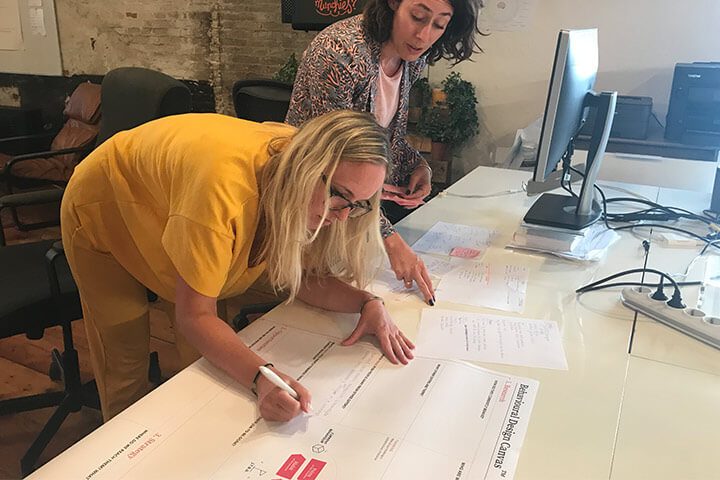
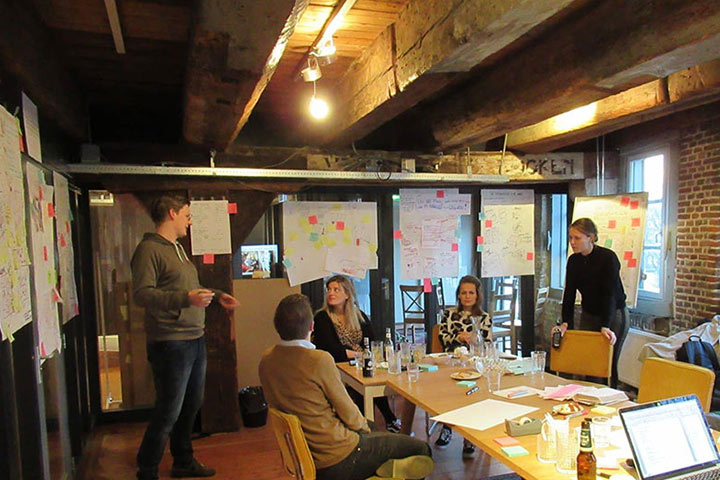
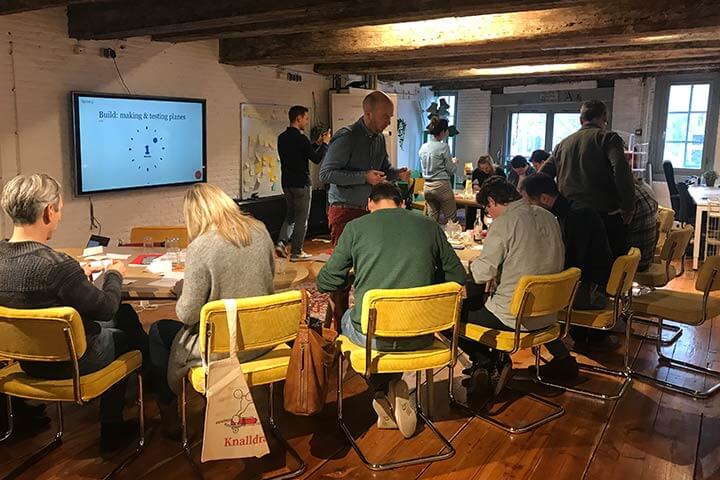
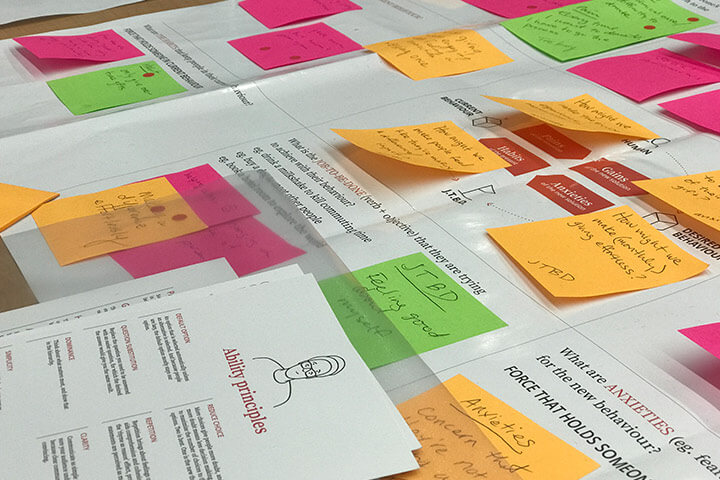
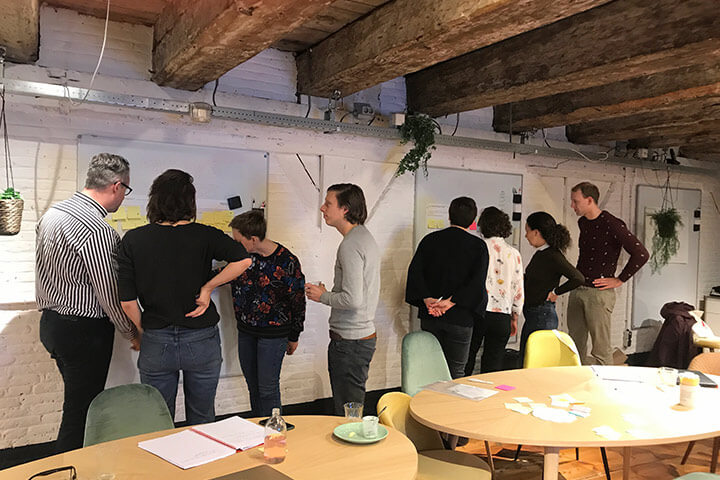
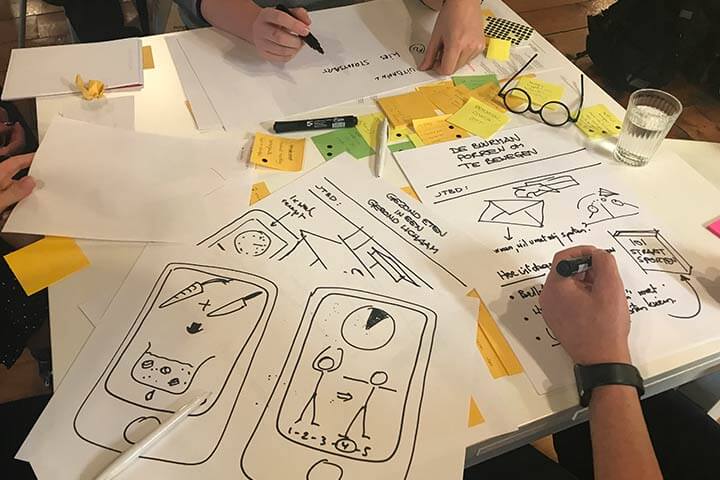



 We felt we were on the right track with the ‘bin issue’. By discussing this issue more deeply in brainstorms, by physically analyzing our own kitchens and by adding some common sense (where would you be without), we concluded that every kitchen has só many potential organic waste ‘bins’: a pot used during cooking, an empty little mushroom box, an empty salad bowl. In other words, simply every kitchen object where you can put organic waste in will do (I don’t recommend using a little girl’s lunchbox, my daughter didn’t appreciate it).
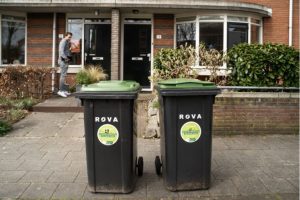 Also, we designed a so-called ‘wheelie bin bingo’. All citizens of Amersfoort with a green wheelie bin (for organic waste) received a brochure in their postbox. This brochure contained, amongst other things, information about the importance of separating waste and tips & tricks regarding the right way to do it. But it also included a sticker upon which people had to write down their house number. By pasting their sticker on their green wheelie bin, all citizens were automatically enrolled in the periodic ‘green wheelie bingo’ (having a chance to win modest but fabulous prizes).

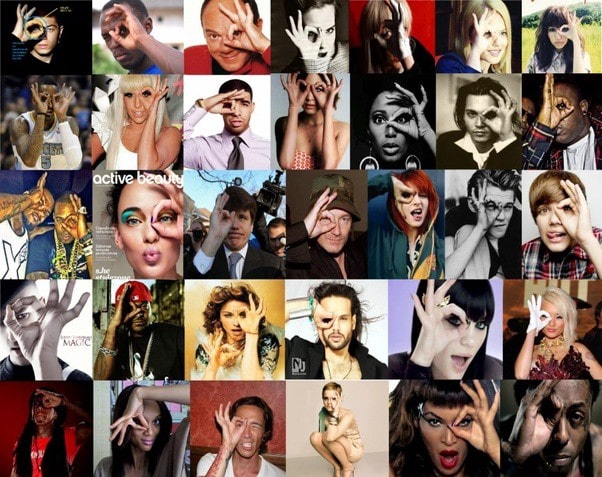


 Happiness comes in four chemical flavours.
 This year I read
 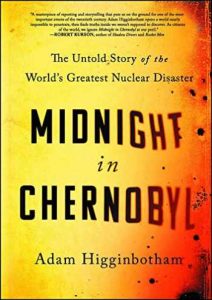 This book made a significant impression on me. It tells the story of the nuclear disaster in Chernobyl. You get a deeper understanding of how the Communist System shaped the behaviours that eventually lead to the nuclear disaster in 1986. The story of Chernobyl is the story of a system that produced layer upon layer of bureaucrats that only wanted to hear good news and who were obsessed with success and glory at all costs.
 This year I discovered the historian and philosopher Philipp Blom. What a lucid writer.
 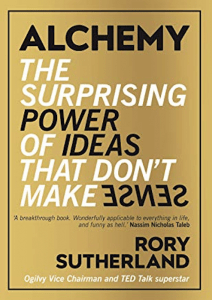 Whenever people ask me to recommend a book on behavioural science, this is the one I recommend. Alchemy is witty, creative, sharp. Rory Sutherland knows how to make you fall in love with the intriguing world of behavioural economics. His book challenges flawed human understanding in the way we think about designing products, services, policies and our private life. When you embrace irrationality, you will come up with highly counterintuitive ideas that can make a huge difference.
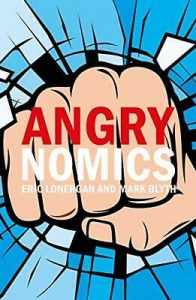 I have
  I sincerely hope this book is going to get translated into English. Hendrik and Sander did a fantastic job exploring a simple question: Why is it that the economy is booming, but less and fewer people benefit from this boom? They explore how we became obsessed with the economy while forgetting that the economy should be instrumental in shaping society. Fantoomgroei inspired my liberal friends and me to think about how the rules and the beliefs underneath the current economy produce growing inequality. It explores how to fix it through more cooperative ways of thinking
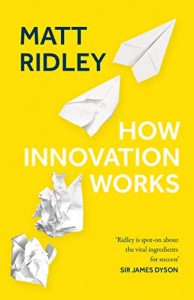 I discovered
 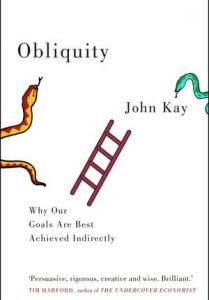 Fascinating book. It’s a bit of a cult book in the planning community. Obliquity makes a strong case for approaching goals indirectly. If you want to get rich, never go after wealth. If you’re going to get happy, never chase happiness. If you want to learn how the pursuit of financial goals time and again turns out to be the fastest path to oblivion for companies, read this intriguing little book.
 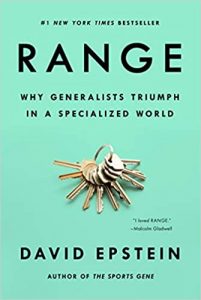 This book was one of the most recommended books by the Farnamstreet blog learning community. It’s a great book about how we learn. The core idea is that true mastery is all about combining skills, instead of focus on learning just one. Real outperformers seem to combine know-how from multiple disciplines. But the book is much richer than this elevator pitch. Tons of insights on how to learn. For instance: You will learn much faster if you try to apply the theory and fail. Failing fuels your curiosity for the right approach, and as a consequence, your learning experience becomes much more profound. This is a book I’ll have to re-read multiple times.